
Retiring a large piece of equipment is usually a commercial property decision, not a simple clean-up chore. An older forklift, skid steer, excavator, loader, backhoe, telehandler, tractor, or other machine can occupy valuable space long after it stops serving an operation. For businesses, contractors, farms, yards, and industrial properties, the useful starting point is a clear review of the equipment, the site, and the records available. Heavy Machinery Removal serves Vancouver and the Lower Mainland from Langley Township. To discuss an unwanted machine, call (236) 900-3163. Call (236) 900-3163 to talk about your machine.
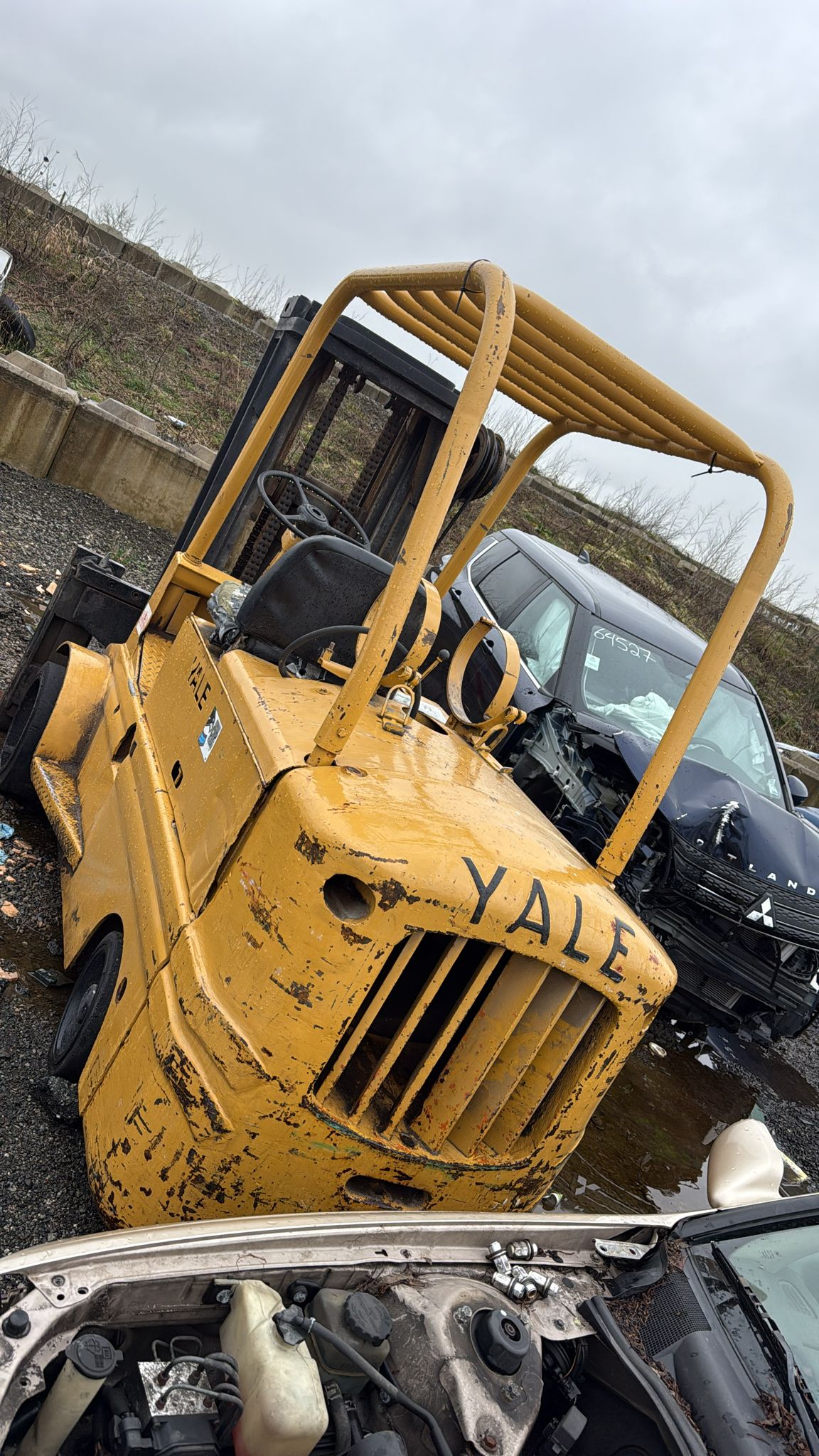
Commercial equipment disposal begins with the machine’s actual condition
A removal conversation is more useful when the owner can provide a straightforward description of the machine. Start with the make, model, approximate year if known, and the current operating condition. Explain whether the equipment still starts, moves, lifts, or performs its original task. If it has visible collision damage, hydraulic leaks, corrosion, missing attachments, or a long period of inactivity, include that information. It is better to distinguish what you know from what you do not know than to guess about an engine, transmission, hydraulic, or electrical issue.
Heavy Machinery Removal publicly lists excavators, mini excavators, skid steers, compact track loaders, wheel loaders, backhoes, bulldozers, telehandlers, forklifts, tractors, and farm machinery among the equipment types it reviews. That does not make every individual machine the same. The condition, configuration, completeness, and accessibility of a particular unit still need to be discussed directly.
Why condition and access both matter
For commercial heavy equipment disposal, the machine and the property have to be considered together. A forklift parked in an open gravel yard presents different access details from a loader behind stored materials, a non-running excavator on a farm, or a telehandler inside a warehouse area. Describe the position of the machine, nearby equipment, gates, overhead obstructions, surface conditions, and whether another person controls access. These details help make the discussion specific to the jobsite rather than based on a generic equipment description.
Langley Township details can shape the property discussion
Heavy Machinery Removal lists its location as 27570 50 Ave #3 in Langley Township. The address is useful context when an owner is calling about equipment in Langley Township, but the actual location of the machine should still be stated clearly. A machine may be at a commercial property, a farm, a storage yard, a construction site, or another Lower Mainland location.
The Township of Langley describes itself as located in the Metro Vancouver Regional District along the Fraser Valley, with a mix of urban and rural settings and access to a transportation network. For an owner with retired equipment, that local mix is a reason to be precise about whether the machine is on a developed commercial site, a farm area, a rural property, or a tightly arranged yard. It is not a promise about access or timing; it is a reminder that the site conditions matter.
Township property-use regulations identify minimum standards related to unsightliness, abandoned properties, and sound. An unwanted machine does not automatically create a bylaw issue, and this article does not interpret the bylaw for any property. If an owner has questions about a particular site, the Township is the appropriate source for municipal guidance. From a disposal perspective, it can still be sensible to review a machine that no longer fits an active operation instead of letting its condition and site access become harder to assess over time.
Do not assume self-haul is the right comparison
The Langley Recycling and Waste Centre explains that materials should be separated by type and that loads are off-loaded by hand. Large machinery has its own size, access, and handling considerations, so this facility guidance should not be treated as an equipment-removal instruction. Instead, it illustrates why a site-specific conversation is more useful than assuming an oversized machine can be handled like ordinary household or small-load material.
Keep commercial records and ownership details available
Before discussing the next step, gather the documents and identifiers you have for the machine. Depending on the equipment, that may include a serial number, purchase or service records, fleet records, lease information, or documents showing who is authorized to make a disposal decision. If a business, property owner, tenant, estate representative, or another party is involved, explain that early. Do not assume every ownership or authorization situation follows the same process.
Remove personal tools, paperwork, fuel cards, site keys, access cards, and items stored in cabs or compartments. Current photos from several angles can also be useful. Include the machine itself and enough of the surrounding area to show where it sits. A photo should document the real condition of the unit, not suggest that it is running or complete if it is not.
Ask for a site-specific commercial review
There is no universal outcome for an unwanted piece of heavy equipment. The type of machinery, its condition, missing components, material characteristics, location, and access all affect the conversation. Owners should avoid treating general online language as a statement of a price, a removal date, or acceptance for a particular machine. The most accurate approach is to share the details and ask what information is needed for the business to review the situation.
This article is for owners considering heavy machinery removal or commercial equipment disposal. Heavy Machinery Removal is not presented here as a used-parts shopping source; the focus is the removal and disposition discussion for a machine an owner no longer needs.
Discuss your equipment and property facts directly
If a forklift, excavator, skid steer, loader, backhoe, telehandler, tractor, or other large machine is no longer useful at a Vancouver, Langley, or Lower Mainland property, start with an honest description of the equipment and its setting. Have the available records, location details, and current photos ready. Then call Heavy Machinery Removal at (236) 900-3163 to discuss the equipment and the appropriate next step for your particular site.